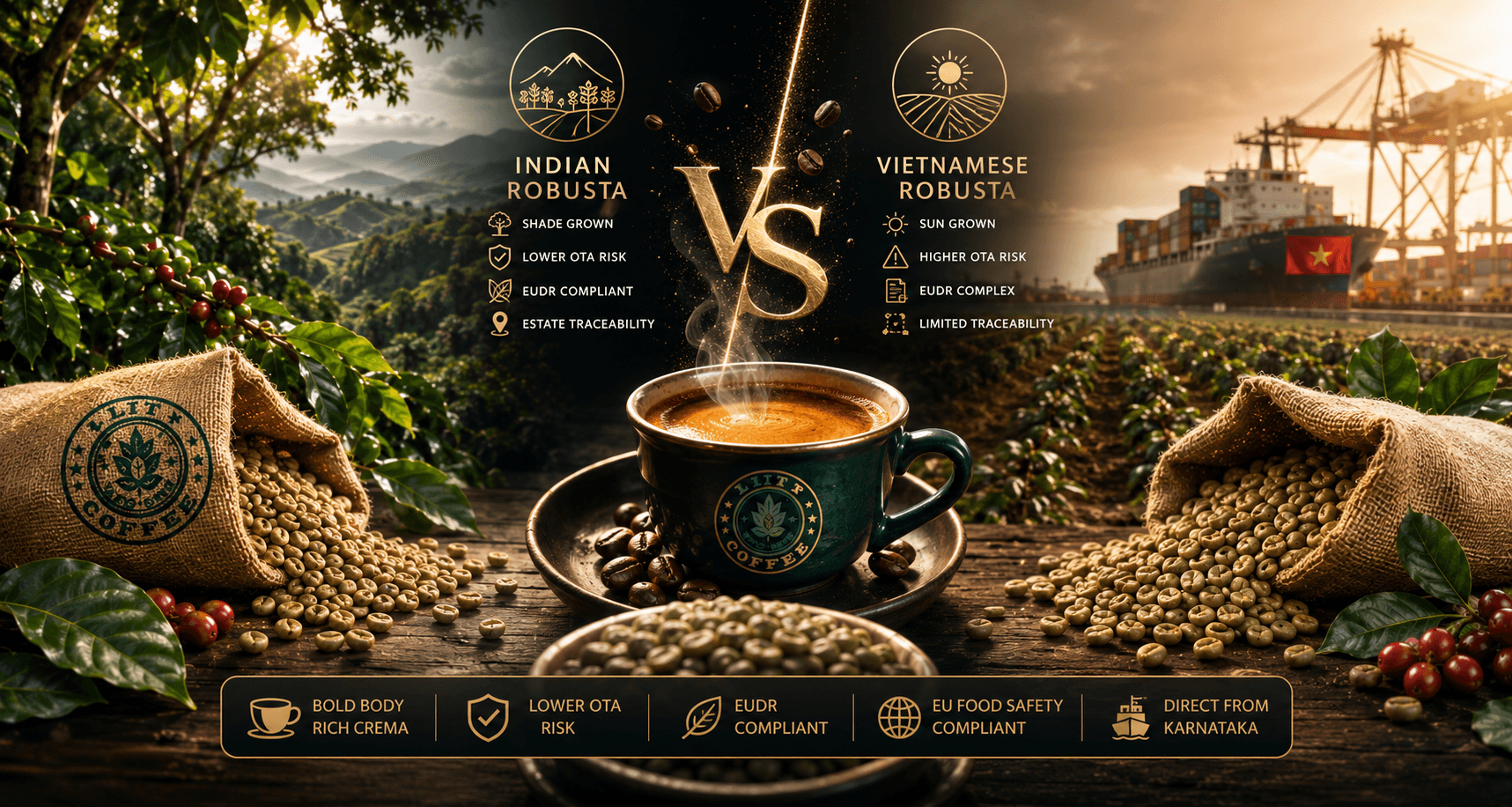
Indian Robusta vs
Vietnamese Robusta
A practical comparison for European importers and espresso blenders — covering cup profile, OTA risk, EU food safety compliance, EUDR traceability, and price.
Why European Roasters Are Looking Beyond Vietnam
Vietnam dominates global Robusta supply — producing over 1.5 million metric tons annually and setting the ICE London price benchmark. For European espresso blenders, Vietnamese Robusta has long been the default high-volume, cost-effective choice.
But two forces are shifting buyer behaviour. First, the EU Deforestation Regulation (EUDR) is making Vietnamese Robusta harder to source compliantly — Vietnam's Central Highlands monoculture and deforestation history require complex due diligence. Second, specialty coffee buyers increasingly want traceable, distinctive Robusta with a cleaner cup — and India's Karnataka estates deliver exactly that.
This guide compares both origins on the factors that matter to European importers and roasters.
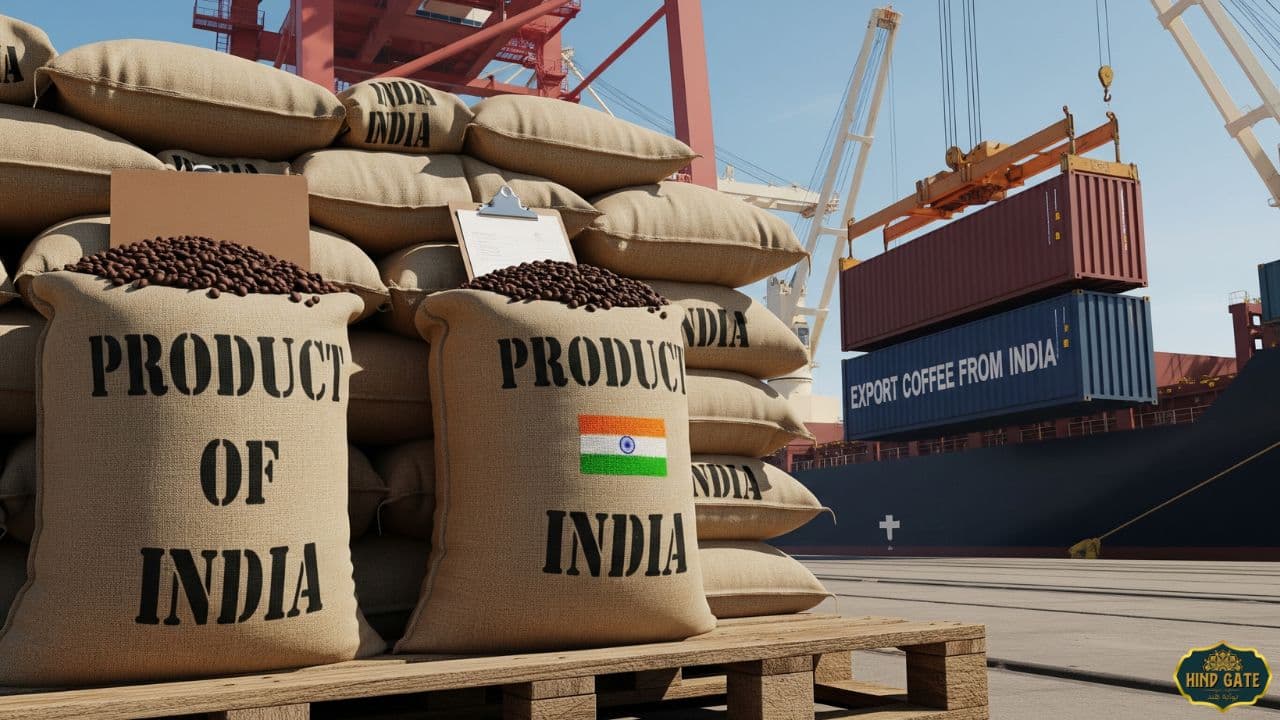
Indian Robusta vs Vietnamese Robusta
Key buying factors for European importers and espresso blenders
Karnataka · Shade-grown
Central Highlands · Sun-grown

How Indian Robusta Tastes in the Cup
Indian Robusta — particularly Robusta Cherry and Robusta Parchment from Karnataka — produces a bold, full-bodied cup with low acidity, dark chocolate and malt notes, and strong, persistent crema. This makes it exceptionally well-suited to Italian-style espresso blends where Robusta content (typically 20–40%) provides body, bitterness balance, and crema longevity.
Vietnamese Robusta, by contrast, tends toward earthier, woodier, and more intensely bitter profiles — useful in high-volume blends but less flattering in premium or specialty espresso. The absence of washed processing options in Vietnam also limits cup clarity.
Body
🇮🇳 Full vs 🇻🇳 Full
Acidity
🇮🇳 Low vs 🇻🇳 Very Low
Bitterness
🇮🇳 Controlled vs 🇻🇳 High
Cup clarity
🇮🇳 Clean (washed) vs 🇻🇳 Earthy (natural)
OTA Risk & EUDR Compliance: The Critical Difference
For European importers operating under EU food safety law (EC 1881/2006), Ochratoxin A (OTA) levels in Robusta coffee are a key compliance concern. OTA is a mycotoxin produced by mould that develops during drying — and sun-dried, high-humidity origins like Vietnam's Central Highlands carry a higher inherent risk.
Indian Robusta, dried under forest shade cover with lower humidity and longer, more controlled drying times, consistently shows lower OTA levels — an advantage for buyers who need to manage food safety risk across their blends.
On EUDR (EU Deforestation Regulation 2023/1115): Indian coffee's shade-grown status under a native forest canopy makes due diligence documentation straightforward — no deforestation link, clear geographic plots, and Coffee Board traceability. Vietnamese Robusta faces a more complex compliance path.
- LIT COFFEE provides EUDR compliance declarations with all shipments
- Coffee Board of India Certificate of Origin included
- SGS / third-party OTA testing reports available on request
- Estate-level traceability documentation available for GI-tagged grades
Indian Robusta Grades Available for Export
All grades supplied in 50kg or 60kg jute bags with inner liner. 20GP = 320 bags. MOQ 5 Metric Tons.

Robusta Cherry (Unwashed)
Natural/dry process. Bold, earthy, high crema. Popular with Italian espresso blenders. Grades AAA through C available.

Robusta Parchment (Washed)
Wet/washed process. Cleaner cup, lower defect count. Lower OTA risk than unwashed. Preferred for premium espresso and instant coffee blends.
Robusta Kaapi Royale
India's only GI-tagged Robusta. Grown in Coorg and Chikkamagaluru. Exceptional cup quality — sweet, full-bodied with nutty notes. Increasingly sought by European specialty roasters who want a Robusta story to tell on their packaging.
View Kaapi Royale specs
Indian Robusta vs Vietnamese Robusta — FAQs
Is Indian Robusta better than Vietnamese Robusta for espresso?
For espresso blending, Indian Robusta generally delivers a cleaner cup with more controlled bitterness and better crema stability than Vietnamese Robusta. It is available in both washed (Parchment) and unwashed (Cherry) grades, giving roasters processing flexibility. Vietnamese Robusta suits high-volume commodity blends but offers less traceability and a less nuanced cup.
What is the OTA risk difference between Indian and Vietnamese Robusta?
Indian Robusta carries lower Ochratoxin A (OTA) risk because it is shade-grown and dried more slowly under forest canopy conditions, reducing mould formation. Vietnamese Robusta, typically sun-dried in humid conditions, shows higher OTA risk. European buyers should verify OTA test results for all Robusta origins under EU food safety regulations (EC 1881/2006).
Which Robusta is easier to source under EUDR?
Indian Robusta is significantly easier to comply with under EUDR (Regulation EU 2023/1115) because Indian coffee is shade-grown under native forest canopy — with no deforestation link. Vietnamese Robusta has a more complex EUDR compliance path due to monoculture sun-growing and historical deforestation concerns in Vietnam's Central Highlands.
What grades of Indian Robusta are available?
Robusta Cherry (unwashed) grades AAA, AA, A, AB, PB, C, and Bulk. Robusta Parchment (washed) grades AA, A, AB, PB, C, and Bulk. The GI-tagged Robusta Kaapi Royale is the premium specialty grade. All available in 50kg or 60kg jute bags.
Can I buy Indian Robusta direct from a Karnataka exporter?
Yes. LIT COFFEE exports Indian Robusta directly from Karnataka to European buyers. MOQ is 5 Metric Tons. We supply FOB from Cochin, Chennai, Mangalore, and Mumbai, and CIF to Hamburg, Rotterdam, Antwerp, Le Havre, Genoa, and other EU ports.
Explore Indian Coffee Export
Ready to Sample Indian Robusta?
Request a green coffee sample or export quote from our Karnataka team. Response within 24 hours.
Contact Our Export Team
Email: export@leelaprasadcoffee.com | Phone: +91-96869 95189
Monday–Friday · 9:00 AM – 6:00 PM IST · Response within 24 hours