Published Aug 18, 2026 · 6 min read
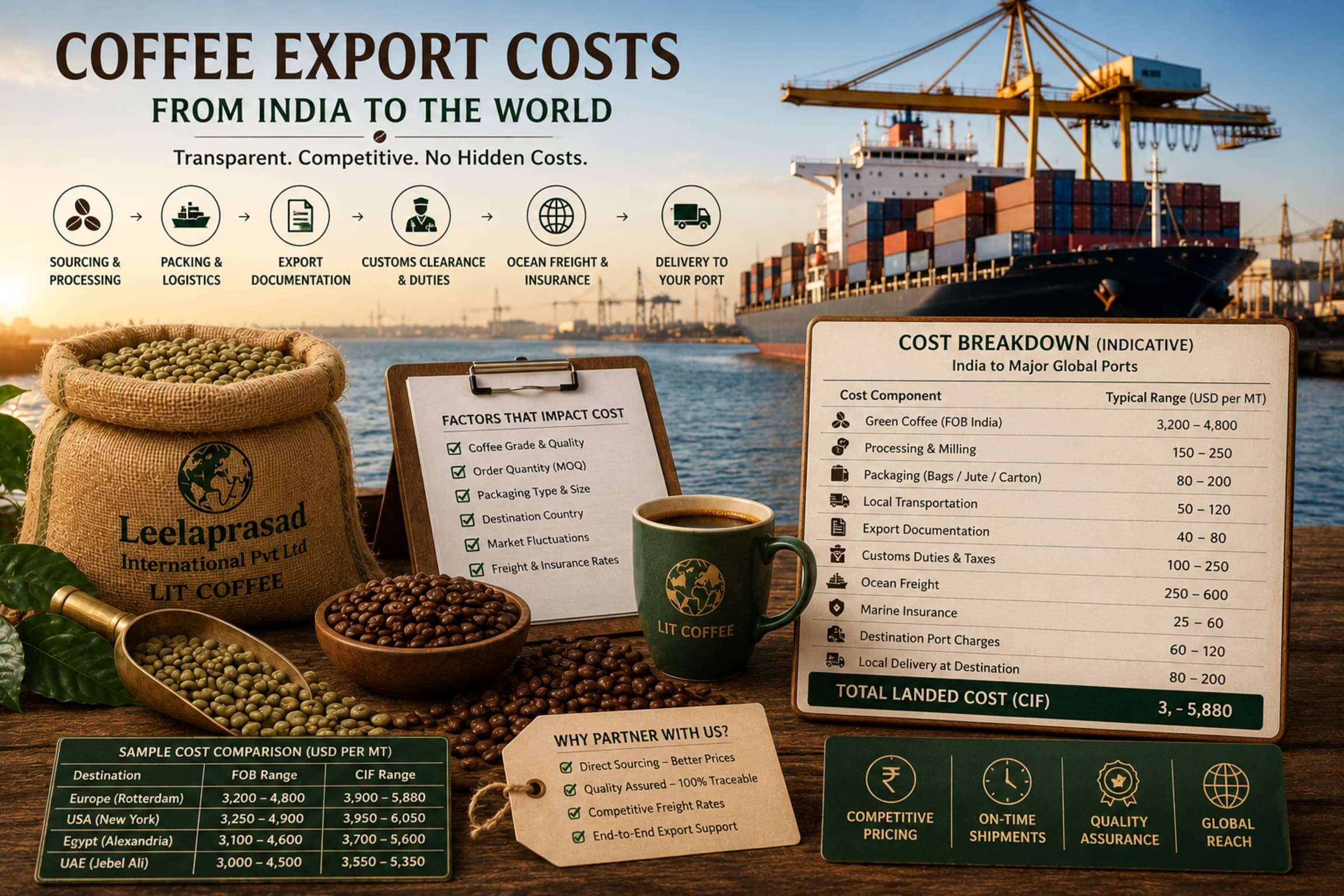
Every coffee export quote comes attached to a three-letter term — FOB, CIF, or CFR — and misunderstanding what it covers is one of the fastest ways to blow a landed-cost budget. Here's what each actually means for a buyer sourcing from India.
FOB (Free on Board)
The exporter's responsibility ends once the coffee is loaded onto the vessel at the Indian port (typically Mangalore or Chennai for our shipments). The buyer arranges and pays for ocean freight, insurance, and destination charges from that point on. FOB gives buyers the most control over freight forwarders and insurance — useful if you already have established shipping relationships.
CIF (Cost, Insurance & Freight)
The exporter covers the goods, insurance, and freight to the buyer's named destination port. This is the simplest option for first-time importers — one quote, one invoice, fewer moving parts. See our CIF pricing breakdown for how this is typically structured.
CFR (Cost & Freight)
A middle ground: the exporter covers goods and freight, but the buyer arranges their own marine insurance. Less common than FOB or CIF, but occasionally used where a buyer already holds a blanket insurance policy.
Which Term Should You Choose?
First-time importers generally do best with CIF — fewer logistics to coordinate. Buyers with existing freight-forwarder relationships or high shipping volume often prefer FOB for better rate control. For a full walkthrough of documentation either way, see our export documentation checklist and pricing guide.