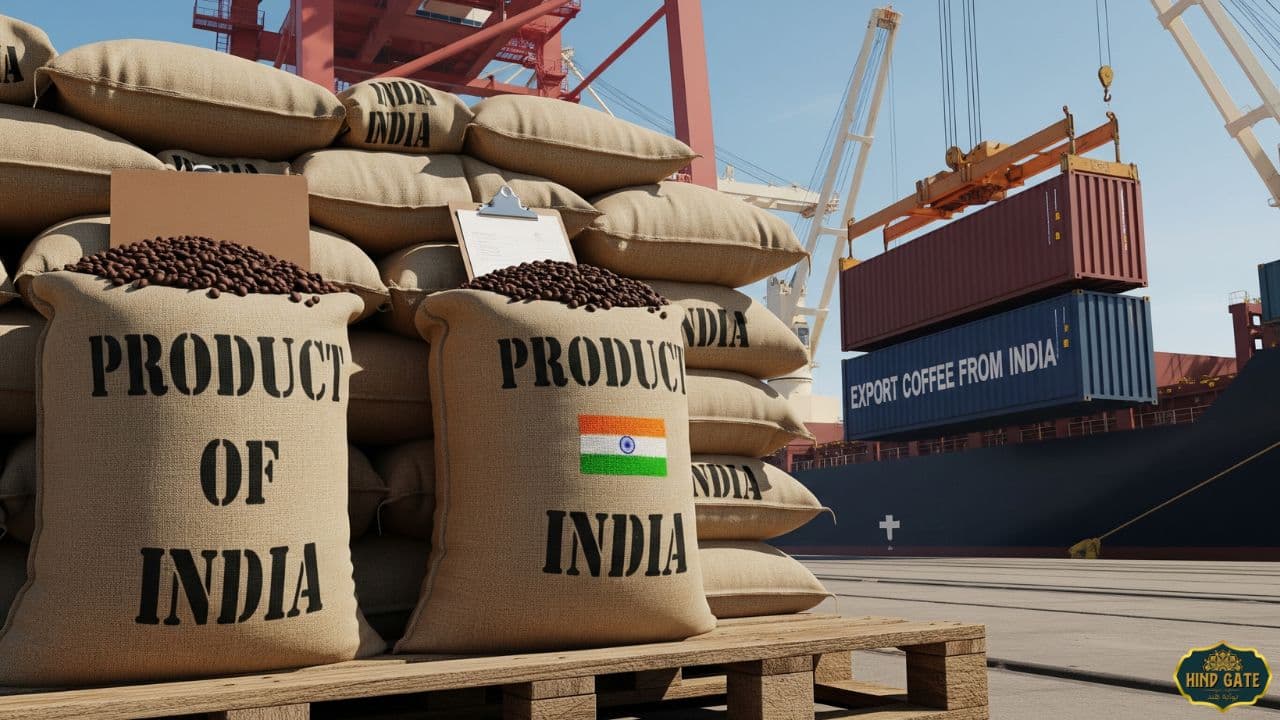
Coffee Importer Guide
How to Import Coffee from India — Complete Step-by-Step Guide
HS Codes · MOQ · FOB vs CIF · Documentation · Shipping Times · Finding a Supplier
Everything a Coffee Importer Needs to Know
Whether you are importing coffee for the first time or looking to add an Indian origin to your existing portfolio, this guide covers every step — from identifying your requirements and understanding HS codes, to placing your first order and clearing customs at your destination port.
This guide is written by the export team at LIT COFFEE (Leelaprasad International Pvt Ltd) — a registered Indian coffee exporter supplying buyers across Russia, Europe, the Middle East, and Asia.
What This Guide Covers
8 Steps to Import Coffee from India
Identify Your Coffee Requirements
Define your needs before contacting any supplier. Key decisions: Arabica vs Robusta, green vs roasted vs instant, grade/screen size, processing method (washed or natural), quantity per shipment, and frequency of orders.
- Arabica — mild acidity, chocolate/floral notes, preferred by specialty roasters
- Robusta — bold, high caffeine, lower cost, ideal for espresso blends and instant coffee
- Green beans — for roasters who roast in-house
- Roasted beans — ready for grinding or retail packaging
- Instant coffee — spray-dried, agglomerated, or freeze-dried for FMCG buyers
Understand HS Codes for Coffee
Every coffee import requires the correct HS (Harmonised System) tariff code. Using the wrong code causes customs delays, penalties, and clearance failures.
- 0901.11 — Green coffee beans, not decaffeinated (most common for bulk import)
- 0901.12 — Green coffee beans, decaffeinated
- 0901.21 — Roasted coffee, not decaffeinated
- 0901.22 — Roasted coffee, decaffeinated
- 2101.11 — Extracts, essences and concentrates of coffee (instant coffee)
- 0901.90 — Coffee husks, skins, and coffee substitutes
Choose Your Trade Terms — FOB or CIF
FOB and CIF determine where your responsibility as a buyer begins. This affects your cost, risk, and logistics complexity significantly.
- FOB — Supplier loads the coffee at the Indian port. You arrange and pay for shipping + insurance. More control, slightly lower cost for experienced importers.
- CIF — Supplier handles shipping and insurance to your destination port. One invoice, simpler for new importers. Slightly higher cost but zero logistics complexity.
- DAP — Delivered At Place. Supplier delivers to your named destination. Uncommon for coffee but available on request.
- Recommendation for first-time importers: choose CIF. It simplifies your first shipment significantly.
Know Your Minimum Order Quantity
Indian coffee exporters typically set their MOQ at one full 20GP container. Understanding container capacity helps you plan your purchase volume accurately.
- 1 × 20GP container = approximately 320 bags
- 50kg bags × 320 = 16,000 kg = 16 Metric Tons
- 60kg bags × 320 = 19,200 kg = 19.2 Metric Tons
- LIT COFFEE MOQ = 5 Metric Tons (accessible for smaller importers)
- Mixed container loads — multiple varieties in one container — available on request
- Trial shipments available for first-time buyers before bulk commitment
Request Samples Before Ordering
Never place a bulk order without first evaluating physical samples. Professional coffee importers always cup and evaluate before committing.
- Request 1–2 kg samples via international courier
- Evaluate moisture content, screen size, defect count, and cup profile
- Ask for lot numbers for traceability
- Compare 2–3 suppliers before deciding
- Sample costs (typically $30–$60 shipped) are credited against confirmed orders at LIT COFFEE
- Allow 5–7 days for samples to arrive depending on destination
Prepare Your Import Documentation
Coffee imports require a specific set of documents from the exporter and additional registrations on your side. Missing documents cause port delays and demurrage charges.
- From exporter (we provide): Commercial Invoice, Packing List, Bill of Lading, Certificate of Origin, Phytosanitary Certificate, FSSAI Health Certificate, Coffee Board Grading Certificate
- Your responsibility (importer): Import licence or registration (where required), local food safety registration, customs broker appointment, duty payment
- EU buyers: EUDR compliance documentation now required for all coffee imports
- Russia/EAEU buyers: Declaration of Conformity under TR CU 021/2011
- USA buyers: FDA Prior Notice filing before shipment arrives
Select Your Supplier and Place Order
Once samples are approved, formalise the order with a written contract specifying all quality parameters, quantity, price, delivery terms, and payment conditions.
- Confirm: variety, grade, screen size, moisture % (target 11–12%), defect count
- Agree on: quantity, packaging (50kg or 60kg bags), trade terms (FOB/CIF), port of destination
- Payment terms: LC at sight, TT with advance, or full advance for first orders
- Expect: performa invoice → payment → production → quality check → dispatch → documents → delivery
- Dispatch time from LIT COFFEE: 3 days from order confirmation
Track Your Shipment & Clear Customs
Once your shipment departs India, work with your customs broker in advance to ensure all documents are ready for port clearance.
- Track via Bill of Lading number on shipping line website
- Send original documents to your customs broker before vessel arrives
- Pay import duties (if applicable) before or at port clearance
- Arrange inland transport from port to your warehouse
- Inspect on arrival — check for moisture damage, bag integrity, quantity
- Contact supplier immediately if any quality discrepancy
HS Codes for Coffee Imports
Use the correct HS code to avoid customs delays. These codes apply in most countries including EU, Russia, UAE, and Asia.
| HS Code | Description | Typical Duty |
|---|---|---|
| 0901.11 | Green coffee beans — not decaffeinated | 0% (most markets) |
| 0901.12 | Green coffee beans — decaffeinated | 0% (most markets) |
| 0901.21 | Roasted coffee — not decaffeinated | Varies by country |
| 0901.22 | Roasted coffee — decaffeinated | Varies by country |
| 2101.11 | Instant coffee extracts & concentrates | Varies by country |
| 0901.90 | Coffee husks, skins & substitutes | Varies by country |
FOB vs CIF — Which Should You Choose?
Free on Board
Supplier loads coffee onto the vessel at the Indian port. You arrange and pay for ocean freight and marine insurance from that point.
Cost, Insurance & Freight
Supplier handles ocean freight and insurance to your destination port. One invoice. No freight coordination needed on your side.
✓ LIT COFFEE recommends CIF for new importers
Complete Import Documentation Checklist
Documents marked "Exporter (us)" are prepared and provided by LIT COFFEE with every shipment.
| Document | Provided By | Required For |
|---|---|---|
| Commercial Invoice | Exporter (us) | Always |
| Packing List | Exporter (us) | Always |
| Bill of Lading | Shipping Line | Always |
| Certificate of Origin | Exporter (us) | Always |
| Phytosanitary Certificate | NPPO India | Always |
| FSSAI Health Certificate | Exporter (us) | Always |
| Coffee Board Grade Certificate | Coffee Board India | Always |
| Fumigation Certificate | Exporter (us) | Some countries |
| TR CU 021/2011 Declaration | Importer (Russia/EAEU) | Russia & EAEU |
| EUDR Documentation | Exporter (us) | EU countries |
| FDA Prior Notice | Importer (USA) | USA |
| GOEIC Registration | Importer (Egypt) | Egypt |
Shipping Times from India
All times are sea freight from Indian ports. Add 3 days dispatch + 3–5 days customs clearance at destination.
| Destination | Main Port | Transit Time |
|---|---|---|
| UAE / Saudi Arabia / Kuwait | Jebel Ali / Jeddah | 10–15 days |
| Russia (Novorossiysk) | Novorossiysk | 18–25 days |
| Germany / Netherlands | Hamburg / Rotterdam | 20–25 days |
| UK | Felixstowe | 22–28 days |
| Russia (St. Petersburg) | St. Petersburg | 25–35 days |
| Japan / South Korea | Tokyo / Busan | 15–20 days |
| China | Shanghai | 12–18 days |
| USA (West Coast) | Los Angeles | 25–30 days |
| Kazakhstan (Aktau) | Aktau | 25–35 days |
| Nepal (Birgunj) | Road freight | 4–7 days |
Import Regulations by Country
Each country has specific import requirements. View our country-specific pages for detailed port, compliance, and documentation information.
Coffee Import — Frequently Asked Questions
What is the HS Code for importing green coffee beans from India?
HS Code 0901.11 covers green coffee beans (not decaffeinated) — the most common classification for bulk green coffee bean imports. Roasted coffee is 0901.21. Instant coffee/extracts fall under 2101.11.
What is the minimum order quantity to import coffee from India?
At LIT COFFEE, the minimum order quantity is 5 Metric Tons. A standard 20GP container holds approximately 320 bags (50kg or 60kg), equating to 16–19 Metric Tons. We support trial shipments from 5MT for new importers.
What is the difference between FOB and CIF for coffee imports?
FOB (Free on Board) means the supplier's responsibility ends at the Indian port — you arrange and pay for ocean freight and insurance. CIF (Cost, Insurance, Freight) means the supplier handles everything to your destination port. First-time importers typically choose CIF for simplicity.
What documents do I need to import coffee from India?
The exporter provides: Commercial Invoice, Packing List, Bill of Lading, Certificate of Origin, Phytosanitary Certificate, FSSAI Health Certificate, and Coffee Board Grade Certificate. You may also need country-specific documents like TR CU declarations (Russia/EAEU), EUDR documentation (EU), or FDA Prior Notice (USA).
How long does it take to import coffee from India?
Shipping times vary by destination: Middle East 10–15 days, Russia (Novorossiysk) 18–25 days, Europe 20–28 days, East Asia 12–20 days, Nepal (road freight) 4–7 days. Add 3 days dispatch from LIT COFFEE and 3–5 days for customs clearance at destination.
Can I get samples before placing a bulk order?
Yes — we send 1–2 kg physical samples via international courier. Samples arrive within 5–7 days. Sample costs are credited against your confirmed order. We recommend sampling before any first bulk commitment.
What certifications does LIT COFFEE hold for coffee export?
LIT COFFEE holds FSSAI, ISO 22000:2018, HACCP, Organic India (NPOP), EU Organic, USDA Organic, Rainforest Alliance, and UTZ certifications. All relevant certificates are provided with each shipment.
Is import duty payable on Indian green coffee beans?
In most major markets, green coffee beans (HS 0901.11) attract 0% import duty — including EU, Russia/EAEU, UAE/GCC, and Japan. India's GSP+ status provides further preferences in some markets. VAT or consumption taxes may apply depending on your country.
More Guides for Coffee Importers
MOQ Guide — Coffee Beans India
Minimum order quantities, container capacities, and bulk pricing structure explained.
💰CIF Pricing Guide
How CIF coffee pricing works — what's included, how to compare quotes, and what to watch for.
🌿Coffee Sourcing India
How to source directly from Karnataka — regions, estates, grades and varieties explained.
☕Instant Coffee Export Guide
Complete guide for instant coffee importers — spray-dried, freeze-dried, agglomerated.
🇪🇺How to Import Coffee from India to Europe
Step-by-step guide covering EU food safety, EUDR, HS codes, ports, and duties.
🏭Indian Coffee Exporter
Overview of LIT COFFEE's export capabilities — varieties, certifications, and trade terms.
Ready to Import Indian Coffee?
Our export team responds within 24 hours with samples, pricing, and full documentation support for your first shipment.
Contact Our Export Team
Email: export@leelaprasadcoffee.com | Phone: +91-96869 95189
Monday–Friday · 9:00 AM – 6:00 PM IST · Response within 24 hours