
How to Import Coffee from India: The Complete Buyer's Guide (2026)
Origins, grades, specifications, documents and Incoterms — everything an international buyer needs before placing a first order of Indian green coffee.
Jan 2026
Updated
Latest revision
15 min
Read Time
Full guide
Trade Buyers
Audience
Importers & roasters
Buying Indian coffee is easy. Buying the right Indian coffee is not.
Thousands of tonnes of coffee leave Indian ports every year, but for an international buyer, the real challenge begins long before a container is loaded. It starts with choosing the right origin, the right grade, the right processing method, the right supplier — and asking for the right specification in writing. Get that part wrong, and no amount of negotiation on price fixes an inconsistent shipment six weeks later.
This guide walks through what a first-time or growing importer needs to know: where Indian coffee comes from, how it's graded, what to check in a pre-shipment sample, and what a proper export quotation should actually contain.
Quick Answer
Before confirming any order, an importer should have the origin, grade, processing method and moisture specification in writing, a physical pre-shipment sample approved, and a quotation that clearly states FOB or CIF with the port named. Everything else in this guide builds toward that checklist.
Where Indian Coffee Is Grown
India's coffee belt runs along the Western and Eastern Ghats, almost entirely shade-grown under native forest canopy alongside pepper, cardamom and areca nut — a growing style that gives Indian coffee a distinct, less acidic profile compared with sun-grown origins.
| Region | Primary Type | Altitude | Notes |
|---|---|---|---|
| Coorg (Kodagu), Karnataka | Arabica & Robusta | 900–1,500m | India's largest producing district; balanced acidity, medium body |
| Chikmagalur, Karnataka | Arabica | 1,000–1,500m | Birthplace of Indian coffee; bright acidity, fruity notes |
| Wayanad, Kerala | Robusta | 700–1,000m | Largest Robusta belt; strong body, high yield |
| Nilgiris, Tamil Nadu | Arabica & Robusta | 1,000–1,800m | Cooler climate, slower cherry maturation, distinct cup profile |
| Araku Valley, Andhra Pradesh/Odisha | Arabica | 900–1,400m | Organic, tribal-farmed, growing specialty reputation |
Arabica vs Robusta: Which Should You Buy?
This is the first real decision an importer makes, and it depends entirely on end use rather than which bean is "better."
Choose Arabica if you need
- •Higher acidity and aromatic complexity
- •Specialty-grade cupping scores
- •Single-origin or estate-marketed coffee
- •Filter, pour-over or light-roast applications
Choose Robusta if you need
- •Full body and crema for espresso blends
- •Higher caffeine content
- •Cost-stable volume for instant coffee manufacturing
- •Resistance to price swings versus Arabica futures
Understanding Indian Coffee Grades
Grading combines bean size (screen number), processing method and defect count. Indian exporters generally follow classifications set by the Coffee Board of India, but naming conventions vary slightly between suppliers — which is exactly why a written specification matters more than a grade name alone.
| Grade | Screen Size | Description |
|---|---|---|
| Arabica Plantation A | Screen 17–18 | Premium bold bean, low defect count |
| Arabica Plantation AA | Screen 18+ | Largest bean size, top-tier lots |
| Arabica Plantation B | Screen 15–16 | Standard commercial grade |
| Arabica PB (Peaberry) | Round bean | Naturally occurring single-seed cherry, denser and sweeter cup |
| Arabica Cherry AB | Screen 15–18 | Natural-processed, fruit-forward profile |
| Robusta Parchment AB | Screen 14–17 | Washed process, cleaner cup for espresso blends |
| Robusta Cherry AB | Screen 14–17 | Natural process, fuller body, cost-efficient |
| Monsooned Malabar | Screen 16+ | Monsoon-aged beans; low acidity, distinctive musty-sweet profile, unique to India |
The 7 Questions Every Coffee Importer Should Ask an Indian Exporter
A good exporter should be able to answer all seven of these without hesitation, and ideally in writing.
1. What is the exact origin?
Don't accept 'Indian Arabica' or 'Indian Robusta' as an answer. Ask for the producing region or estate, the processing method, the grade, and the crop year. Origin traceability affects both cup quality and your ability to market the coffee downstream.
2. What is the processing method and moisture content?
Washed, natural, honey and monsooned coffees behave differently in roasting and have different shelf lives. Ask for the moisture percentage at time of shipment — most specialty buyers request 10–12% for green Arabica and Robusta.
3. What grade, screen size and defect count applies?
Grade names vary by exporter, so ask for the screen size range and the permitted defect count per 300g sample. This removes ambiguity and gives you a specification you can hold the exporter to if a shipment underperforms.
4. Can I get a pre-shipment sample and cupping notes?
A responsible exporter will send a physical pre-shipment sample matching the actual lot, not a generic reference sample. Ask whether the sample was cupped, and request the score sheet or tasting notes alongside it.
5. What is the MOQ and how is it packed?
Confirm whether the minimum order is a full container, a part-container consolidation, or a smaller trial lot. Ask how the coffee is packed — jute bags with a food-grade liner are standard for green coffee travelling by sea.
6. Is the quote FOB or CIF, and from which port?
Get the quotation in writing with the Incoterm, the port of loading, and the validity period. A price without an Incoterm is not a real quote — it leaves freight, insurance and risk transfer undefined.
7. What documentation and certifications come with the shipment?
Ask which documents are included as standard (Certificate of Origin, Phytosanitary Certificate, Coffee Board registration) and which are chargeable extras (organic, Rainforest Alliance, Fair Trade certification, fumigation certificate for certain destinations).
What to Check in a Pre-Shipment Sample
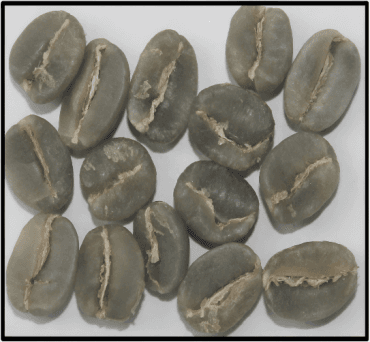
Never confirm a full order on a "type sample" alone — always request a pre-shipment sample pulled from the actual lot booked for your container. When it arrives, check:
FOB vs CIF: Which Is Better?
| Factor | FOB | CIF |
|---|---|---|
| Who arranges shipping | Buyer | Seller |
| Who arranges insurance | Buyer | Seller |
| Risk transfers at | Port of loading (India) | Port of loading (India)* |
| Best suited to | Buyers with their own freight forwarder / volume rates | First-time buyers who want a simpler, all-in quote |
*Under Incoterms, risk transfers at the loading port under both FOB and CIF — CIF only shifts who pays for freight and insurance, not who bears the risk in transit. This is the single most common misunderstanding among new importers.
How Green Coffee Should Be Packed
Standard export packing for green coffee from India is 60kg or 30kg jute bags, with a food-grade inner liner (such as GrainPro or Ecotact) to control moisture and protect against pests and taint during transit. A standard 20ft container typically holds around 19.2 tonnes of bagged green coffee. Ask your exporter to confirm bag weight, liner type, and how the container will be stuffed and dunnaged for a sea voyage.
Export Documents You Should Receive
How to Avoid Inconsistent Quality Between Shipments
The most common complaint from repeat importers isn't a bad first shipment — it's a good first shipment followed by an inconsistent second or third one. This usually happens when an exporter blends multiple smaller lots to fill an order without disclosing it. Protect yourself by asking for lot traceability on every shipment, keeping a reference sample from each approved order, and comparing it against the next pre-shipment sample before you confirm.
Indian Coffee Import Checklist
Before confirming your first shipment, make sure you have:
- ☐Origin (region/estate) confirmed in writing
- ☐Arabica or Robusta specified
- ☐Grade and screen size confirmed
- ☐Processing method (washed/natural/honey/monsooned) confirmed
- ☐Moisture specification agreed
- ☐Defect count per 300g sample agreed
- ☐Pre-shipment sample received and approved
- ☐Packaging and liner type confirmed
- ☐MOQ confirmed (full container / LCL / trial lot)
- ☐Incoterm confirmed — FOB or CIF, with port named
- ☐Required export documents listed
- ☐Destination-country import requirements checked
- ☐Shipment / lead time schedule agreed
- ☐Payment terms agreed (advance, LC, or partial)
Where Leelaprasad International Fits In
At Leelaprasad International Pvt Ltd, we believe international coffee sourcing should begin with transparency — clear specifications, verified samples, complete documentation and honest commercial terms before a shipment is ever confirmed. We source directly from Coorg, Chikmagalur and Wayanad growers, so every quote we give is tied to a real, traceable lot rather than a generic origin description.
We're a green coffee exporter first, which also means we know our own product from the roasting side — our retail arm, LIT COFFEE, roasts and sells the same estates we export in green form. If you're evaluating Indian coffee for import as a roaster, distributor or trade buyer, we're happy to walk through origin options, send a genuine pre-shipment sample, and quote clearly on FOB or CIF terms.
Frequently Asked Questions
What is the minimum order quantity for importing coffee from India?
MOQs vary by exporter. Most work in single-origin lots starting from a full 20ft container (around 19.2 tonnes), though smaller trial quantities are sometimes available via LCL or air freight for new buyers.
What's the difference between FOB and CIF?
FOB means the buyer arranges and pays for shipping and insurance from the Indian port onward. CIF means the exporter arranges and pays for it, usually reflected in a higher unit price — but risk still transfers at the loading port under both terms.
What documents are required to import coffee from India?
A standard shipment includes a Commercial Invoice, Packing List, Bill of Lading, Certificate of Origin, Phytosanitary Certificate, and Coffee Board of India registration, with a Fumigation Certificate required for some destinations.
Should I import Arabica or Robusta?
Arabica suits buyers prioritising acidity, aroma and specialty cupping scores. Robusta suits buyers prioritising body, crema and price stability for espresso blends and instant manufacturing.
Ready to Source Coffee from India?
Tell us your origin preference, target grade and destination port, and we'll come back with a written specification, a pre-shipment sample offer, and a clear FOB or CIF quotation.

Explore More
Contact Our Export Team
Export: www.leelaprasadcoffee.com | Shop: www.litcoffee.in
Response within 24 hours