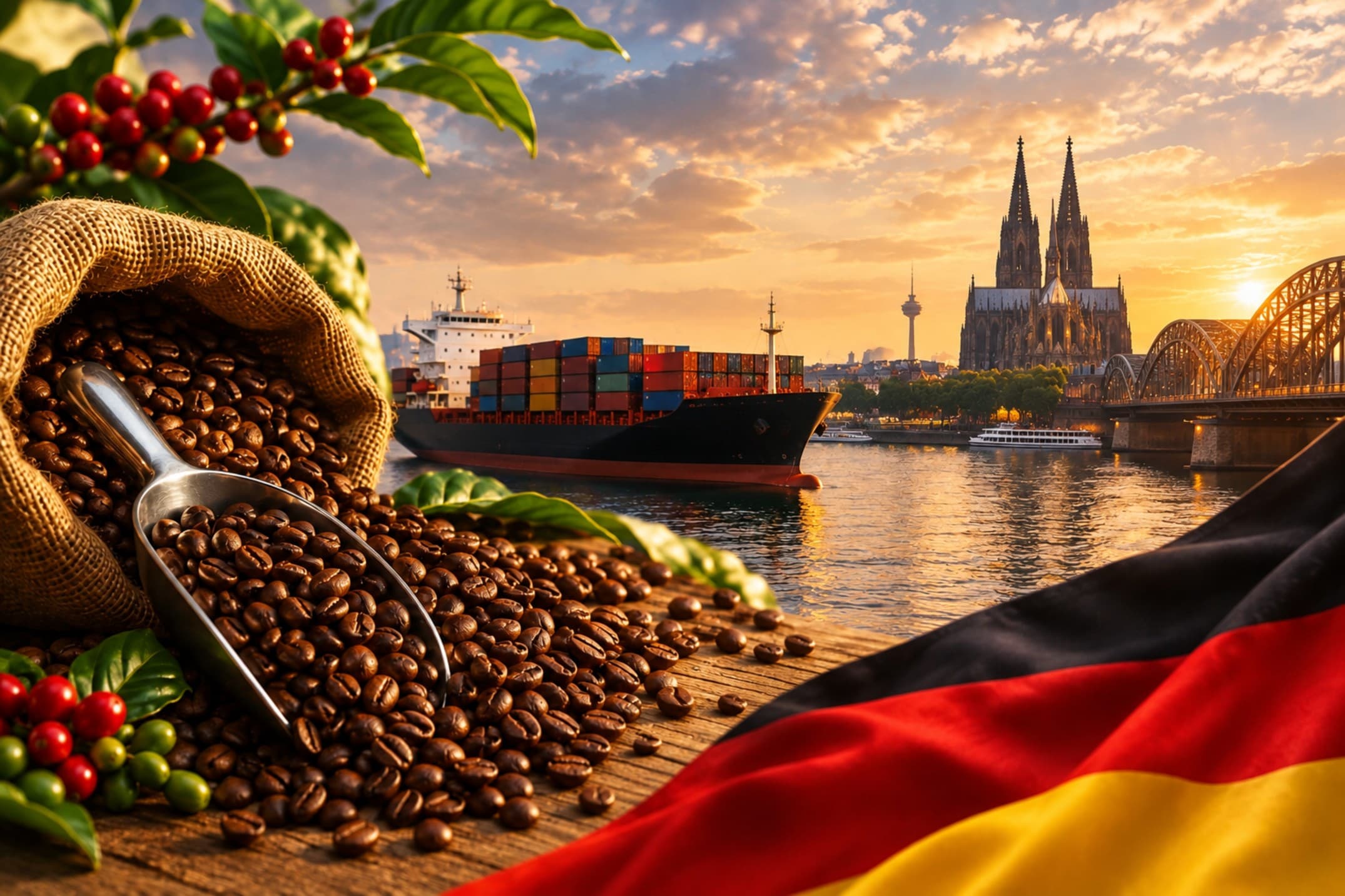
Coffee Importer Guide for Germany
Everything a first-time or growing coffee importer needs to know about bringing coffee into Germany — tax treatment, EU regulation, documentation, ports, and choosing a supplier.
Germany's Coffee Trade Has Its Own Rules
Germany is one of Europe's largest coffee-consuming and re-exporting markets, but importing into it means navigating a few things that are specific to the country and the EU — a domestic coffee tax that only applies once beans are roasted, and a new EU-wide deforestation regulation that reaches coffee for the first time.
This guide walks through what actually matters for a green coffee importer, from classification and tax treatment through to documentation, shipping, and picking a supplier you can build a long-term relationship with.
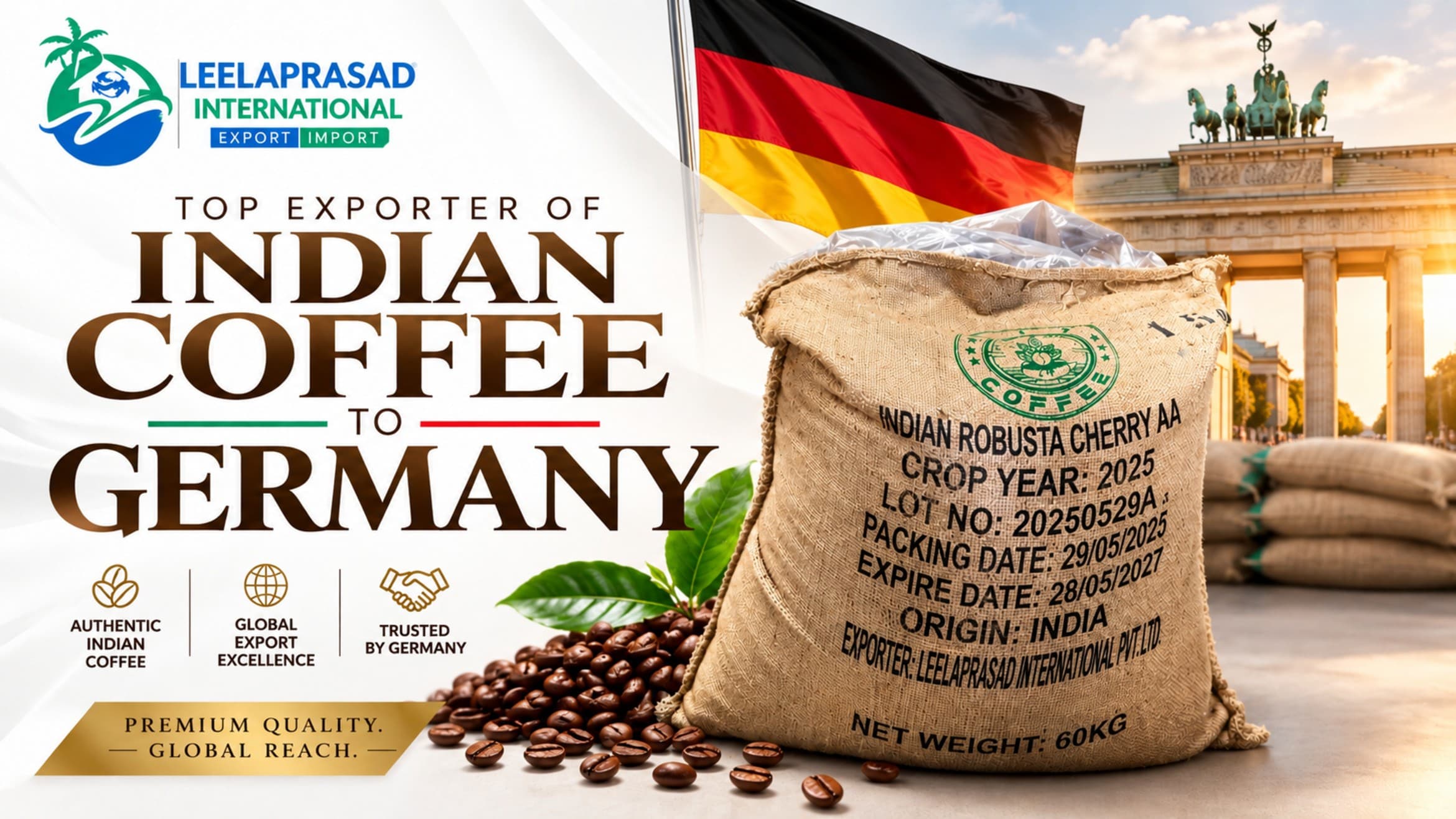
HS Codes, Duty, and the Kaffeesteuer
HS Code 0901
Coffee — roasted or not, decaffeinated or not — is classified under HS Code 0901, with sub-headings distinguishing green from roasted and caffeinated from decaffeinated.
EU Import Duty
Green coffee generally enters the EU at a zero percent duty rate, while roasted coffee carries a duty of around 7.5%, which is one reason most buyers import green and roast domestically.
Kaffeesteuer (Coffee Tax)
Germany's own excise duty — €2.19 per kg for roasted coffee, €4.78 per kg for soluble coffee — applies once coffee is roasted or processed. Green, unroasted coffee beans are exempt.
Why Green Coffee Is the Common Route
Because Kaffeesteuer and the higher EU duty both apply at the point of roasting, most German roasters and traders import raw green beans and roast in-country, avoiding both costs on the way in.
VAT
German VAT applies on top of any duty and Kaffeesteuer, calculated as part of the standard import declaration at customs.
The EU Deforestation Regulation (EUDR)
Coffee is one of seven commodities covered by the EUDR, alongside cocoa, palm oil, soy, cattle, rubber, and wood. The regulation requires operators to show that coffee placed on the EU market is deforestation-free and legally produced, traced back to the plot of land it was grown on.
30 December 2026
Full due diligence obligations apply to large and medium operators and traders from this date, including submitting a due diligence statement for each shipment.
30 June 2027
Micro and small operators get an extended deadline, with a simplified declaration regime available for qualifying small primary operators in low-risk countries.
The regulation's timeline has shifted more than once since it was adopted in 2023, so importers should confirm the current status directly with the European Commission or their customs advisor before finalizing compliance plans. Leelaprasad Coffee can supply estate or region-level traceability information to support your due diligence documentation as these requirements come into force.
What Every Shipment Needs
Beyond the tax and regulatory picture, every shipment needs a standard documentation package for customs clearance at a German port:
- Certificate of Origin
- Phytosanitary Certificate
- Commercial Invoice & Packing List
- Bill of Lading
- EUDR due diligence statement (as it comes into force)
Most importers use a customs broker or freight forwarder in Germany to handle clearance on arrival, while the exporter prepares the paperwork required on the origin side.
Ports, Terms, and Timelines

Hamburg (Primary Port)
Germany's largest coffee port by volume, with established warehousing and handling infrastructure for green coffee.
Bremen & Bremerhaven (Alternate)
Secondary ports worth considering depending on where your inland warehouse or roastery is located.
FOB & CIF Incoterms
FOB (Free on Board) puts ocean freight and insurance in the importer's hands; CIF (Cost, Insurance and Freight) has the exporter arrange both.
Typical Container Size
A 20GP container loaded with roughly 320 bags is the standard shipment size for a 5-metric-ton minimum order.
What to Look For Before You Commit
Direct sourcing at origin
Consistent grading between shipments
Estate or region traceability
Transparent documentation
Reliable dispatch timelines
Sample-first ordering process
Coffee We Export to Germany
What Our Buyers Say
★★★★★ 5.0/5 · 9 verified Google reviews
★★★★★
"Excellent quality coffee beans with consistent aroma and taste. Highly recommended."
Abhishek Bharadwaj
Google review
★★★★★
"Great experience working with the team. Highly recommended."
Yashas Vyshnav
Google review
★★★★★
"LIT COFFEE is a reputed name in Indian green coffee exports."
Nagu Virat
Google review
★★★★★
"Excellent quality coffee beans with consistent taste and aroma. Highly recommended."
Nithin Vaishnav
Google review
★★★★★
"Strong exporter network and dependable supply of Indian green coffee beans."
vinod lokannavar
Google review
★★★★★
"Very calm and cooperative staff and friendly — any information regarding coffee, you can contact them anytime."
Varsha K
Google review
★★★★★
"Best exporter from India."
Kushal Arun
Google review
★★★★★
"Excellent quality coffee beans with consistent taste and aroma. Highly recommended."
Rahuljss Rahuljss
Google review
★★★★★
Abhishek Mallikarjunayya
Google review
Importing Coffee to Germany — FAQs
What HS code applies to coffee imports into Germany?
Green (unroasted) coffee is classified under HS Code 0901 for EU customs purposes, with sub-headings distinguishing decaffeinated, roasted, and non-roasted coffee.
Does the German coffee tax (Kaffeesteuer) apply to green coffee?
No. Kaffeesteuer applies to roasted coffee and soluble/instant coffee once processed, not to raw green coffee beans, which are exempt from the tax.
What is the EU Deforestation Regulation (EUDR) and does it affect coffee?
The EUDR requires due diligence and plot-level traceability for coffee placed on the EU market. It applies to large and medium operators from 30 December 2026, and to micro and small operators from 30 June 2027.
What documents are required to import coffee into Germany?
A Certificate of Origin, Phytosanitary Certificate, Commercial Invoice, and Packing List are the core documents, alongside EUDR due diligence statements once that regulation applies to your business size.
Which German ports handle most coffee imports?
Hamburg is Germany's primary coffee port, with Bremen and Bremerhaven handling additional volume.
What Incoterms are typically used for coffee imports?
FOB (Free on Board) and CIF (Cost, Insurance and Freight) are the most common terms, depending on whether the importer or exporter arranges ocean freight and insurance.
What should I look for when choosing a coffee supplier?
Direct sourcing at origin, consistent grading, traceability to estate or region, transparent documentation, and a track record of dispatch reliability are the main factors to evaluate.
What is the minimum order quantity for a first coffee import?
5 metric tons is a common minimum, typically loaded as a 20GP container of 320 bags, though sample quantities can usually be arranged before committing to a full container.
Do I need a customs broker to import coffee into Germany?
Most importers work with a customs broker or freight forwarder in Germany to handle clearance on arrival, while the exporter prepares the paperwork required on the origin side.
Have Questions About Your First Import?
Our export team has guided many first-time German buyers through this process — tell us where you are and we'll help you figure out the next step.
Contact Our Export Team
Email: export@leelaprasadcoffee.com | Phone: +91-96869 95189
Monday–Friday · 9:00 AM – 6:00 PM IST · Response within 24 hours